
What to Expect at Your First Yoga Class
Yoga Guide
What to Expect at Your First Yoga Class
Nervous about your first yoga class? Here’s exactly what happens, from what to wear and when to arrive to the relaxation at the end, plus answers to the questions beginners ask most.
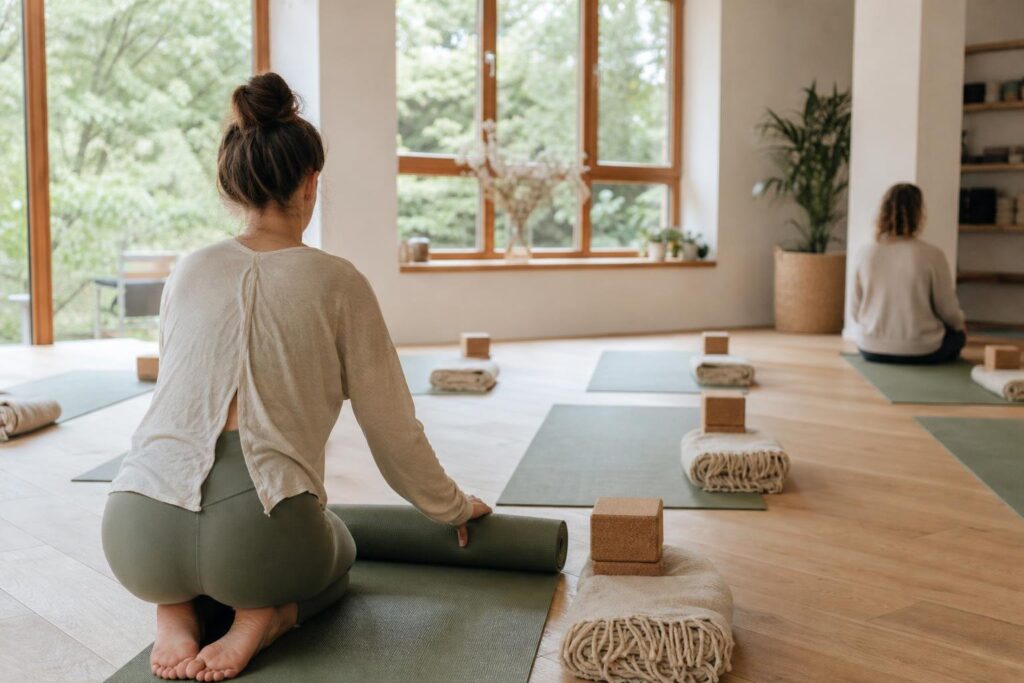
Walking into your first yoga class can feel a bit daunting. You might be wondering whether you’re flexible enough, what everyone else will be wearing, or whether you’ll be the only beginner in the room. The good news is that yoga teachers see first-timers every week, and a good class is designed so that anyone can join in. Here’s what actually happens, from the moment you book to the moment you roll up your mat.
Before you go
Choose a beginner-friendly class
Not every class is the same pace. If you’re new, look for classes described as beginners, all levels, gentle or slow flow. Styles that tend to suit first-timers include Hatha, Gentle Yoga and Restorative Yoga. Faster styles such as Vinyasa, Power Yoga or Ashtanga are brilliant once you know the basics, but they move quickly from one posture to the next. If you’re not sure, our guide to the different yoga styles explains what each one is like.
Get in touch with the teacher
Most independent teachers are very happy to hear from you before your first class. It’s worth sending a quick message to check:
- whether the class is suitable for complete beginners
- if you need to book, and how to pay
- whether mats and props are provided
- anything about the venue, such as parking or which entrance to use
If you have an injury, a health condition or you’re pregnant, mention it now. A teacher can only help you adapt the practice if they know.
What to wear and bring
Wear something comfortable that lets you move and bend without worrying about it: leggings, joggers or shorts, and a top that isn’t too loose, as baggy tops tend to slide up when you lean forward. You’ll practise barefoot, so socks are optional for the relaxation at the end.
It’s helpful to bring:
- a yoga mat, if you have one (many classes have spares, but check)
- a bottle of water
- a layer to keep warm during relaxation
- a small towel if the class is likely to be energetic
Eat lightly
Try not to have a big meal in the two hours before class. Twisting and folding forward on a full stomach is uncomfortable. A light snack an hour or so beforehand is usually fine.
When you arrive
Aim to get there 10 to 15 minutes early. It gives you time to find the room, fill in a short health form if the teacher uses one, and set up without rushing. Introduce yourself and let the teacher know it’s your first class. They’ll usually suggest a good spot, often somewhere you can see them clearly, and show you which props you might need.
Take your shoes off before you walk onto the practice area, and switch your phone to silent. Then unroll your mat, sit down and take a few calm breaths. Nobody expects you to know what to do yet.
What happens during the class
Most classes in the UK last 60 to 75 minutes and follow a similar shape, although every teacher has their own approach.
1. Settling in
The class often begins sitting or lying down, with a few minutes to arrive, notice your breath and let go of the day. Some teachers chant or set an intention; many don’t.
2. Warming up
Next come gentle movements to loosen the spine, shoulders and hips, such as cat and cow on hands and knees, or simple side bends.
3. The main sequence
This is where you’ll move through standing, balancing, seated and floor postures. The teacher will describe each one and usually show it too. Expect to hear the names of postures in English and sometimes in Sanskrit, the traditional language of yoga. Don’t worry about remembering them.
You’ll often be offered simpler or more challenging versions of the same posture. Always start with the simpler one. Props such as blocks, straps and bolsters are there to make postures more comfortable, not to show that you’re struggling. Experienced students use them all the time.
4. Breathing
Many classes include some breathing practice, called pranayama, either woven through the postures or as a short section on its own. It might be as simple as slowing down your breathing and making the out-breath a little longer. If you’d like to explore this further, have a look at breathwork.
5. Relaxation
Almost every class ends with a few minutes lying still on your back, often under a blanket. This is called savasana, and for many people it’s their favourite part. Let yourself rest. If your mind wanders, that’s completely normal.
How you might feel afterwards
Most people leave their first class feeling calmer and a little more awake. It’s also common to notice some muscles you didn’t know you had over the next day or two, especially in the legs, shoulders and the backs of the thighs. This mild stiffness usually eases quickly. Drink some water and go for a walk if you feel tight.
If anything felt painful rather than just like a stretch, let your teacher know next time. Yoga should never hurt.
Common worries
“I’m not flexible.” You don’t need to be flexible to start yoga, any more than you need to be fit to start going to the gym. Flexibility is something yoga helps with over time.
“Everyone will be better than me.” In a good class, everybody is focusing on their own mat. Teachers see all sorts of bodies, ages and abilities, and beginners are always welcome.
“I won’t know what to do.” That’s what the teacher is for. Watch, listen, and copy the simpler options. By your third or fourth class it will feel much more familiar.
Finding your first class
The best way to start is simply to try a class with a teacher near you. You can search for yoga teachers by town or county, read about their classes and send them a message to ask any questions first. If you find getting down to the floor difficult, chair yoga is a lovely way to begin, and if you’d prefer to start at home, many teachers also offer online classes.
Frequently asked questions
How long is a typical yoga class?
Most group yoga classes in the UK last between 60 and 75 minutes, including a few minutes of relaxation at the end. Some teachers also run shorter 45-minute lunchtime classes or longer 90-minute workshops.
Do I need my own yoga mat for my first class?
Not always. Many teachers and studios keep spare mats and props, but it’s worth checking before you go. If you plan to keep going, a mat of your own is more comfortable and more hygienic.
Can complete beginners join any yoga class?
It’s best to start with a class labelled beginners, all levels or gentle. Faster or more advanced classes can be hard to follow at first. If you’re unsure, message the teacher and ask whether the class suits a first-timer.
Should I tell the teacher about an injury or health condition?
Yes. Let the teacher know before the class starts so they can suggest alternatives for any postures that might not suit you. If you’re pregnant or have a medical condition, check with your GP or midwife before you start.
How often should a beginner do yoga?
Once or twice a week is a great start. Regular, gentle practice tends to help more than occasional long sessions, and many people find they look forward to their weekly class after just a few weeks.
