
Home / Yoga styles / Postnatal & Mum and Baby Yoga
Yoga style guide
Postnatal & Mum and Baby Yoga
Postnatal yoga is designed to support you in the weeks and months after having a baby. Classes gently help the body recover from pregnancy and birth, rebuild strength and offer some much-needed time to breathe and relax.
Find Postnatal Yoga teachers380 teachers listed
Postnatal & Mum and Baby Yoga
Postnatal yoga is designed to support you in the weeks and months after having a baby. Classes gently help the body recover from pregnancy and birth, rebuild strength and offer some much-needed time to breathe and relax.
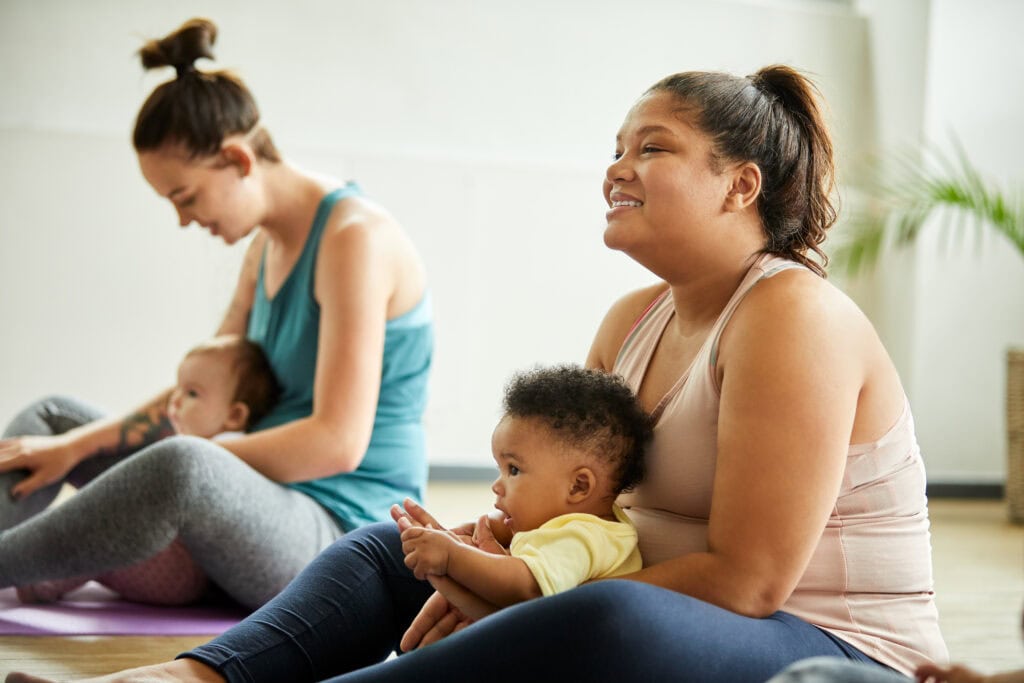
Many classes welcome babies too. Mum and baby yoga combines postnatal yoga for you with songs, gentle movement and massage for your baby, and is a lovely way to bond and meet other new parents.
When Can I Start Postnatal Yoga?
Most teachers recommend waiting until after your six to eight week postnatal check before joining a class, and longer if you had a caesarean birth or a more complicated delivery. Your GP, midwife or health visitor can advise on what is right for you.
Postnatal yoga can be started any time in the first year or so after birth, and many classes are suitable from around six weeks until babies are crawling.
The Aim of Postnatal Yoga
Pregnancy and birth bring big changes to the body. Postnatal yoga focuses on gently restoring the core and pelvic floor, easing tension in the shoulders, neck and back from feeding and carrying, and rebuilding strength at a safe pace.
Just as importantly, classes give you time to rest and connect with your breath, and a friendly space to share the ups and downs of early parenthood with others going through the same thing.
What to Typically Expect from a Postnatal or Mum and Baby Class
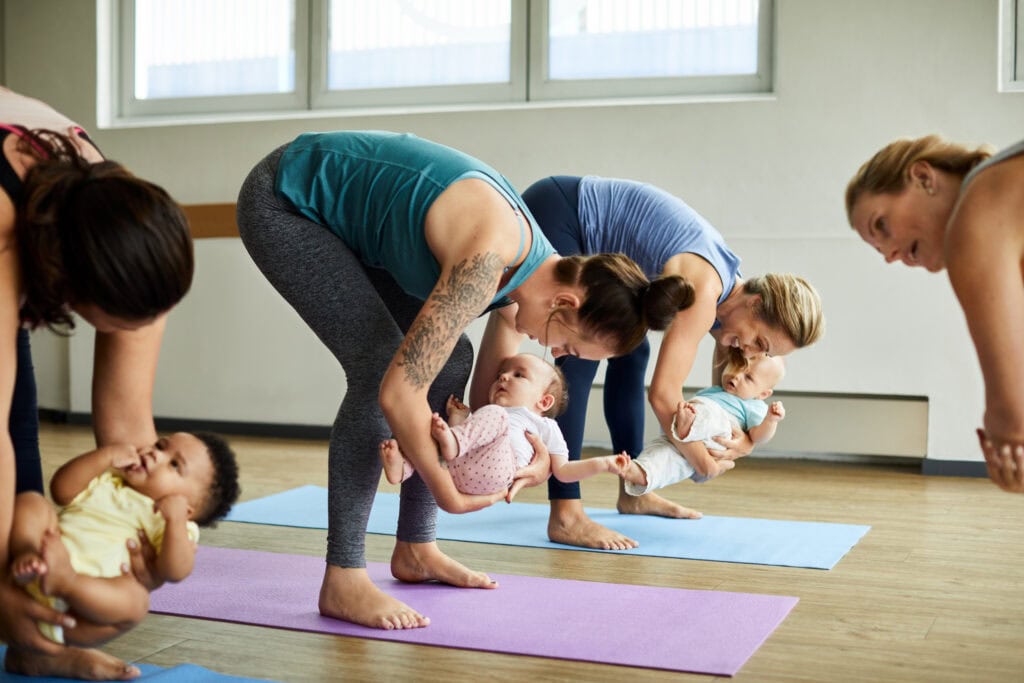
Classes usually last around 60 to 75 minutes. In mum and baby classes, babies lie on a blanket beside or in front of you, and are often included in some of the movements. It is completely normal to stop to feed, change or cuddle your baby whenever you need to, and teachers expect the class to be a little noisy.
The yoga itself is gentle and adaptable, with lots of options. You will often work on the breath, core and pelvic floor, posture and shoulder release, and finish with relaxation, sometimes with your baby resting on you.
Breaking Down the Class Structure
- Welcome and settling
A chance to arrive, chat, settle your baby and connect with your breath.
- Gentle strengthening
Careful work for the core, pelvic floor and posture, building back strength gradually.
- Releasing tension
Stretches for the neck, shoulders, upper back and hips, which often feel tight from feeding and carrying.
- Baby time
In mum and baby classes, songs, gentle movements and baby massage to enjoy together.
- Relaxation
A short rest to recharge, with or without your baby close by.
Benefits of Postnatal Yoga
Every recovery is different, but many new parents find postnatal yoga helps with:
- Rebuilding core and pelvic floor strength
Gentle, guided exercises support the body’s recovery after pregnancy and birth.
- Easing aches and tension
Stretches can relieve tightness in the back, neck and shoulders.
- Rest and relaxation
A little time to slow down and breathe can make a big difference when sleep is in short supply.
- Bonding with your baby
Mum and baby classes offer a calm, happy shared experience.
- Meeting other parents
Classes are a friendly way to make new connections and share support.
Ready to try it?
Find a Postnatal Yoga teacher
380 teachers across the UK list Postnatal Yoga classes.
See all teachersPopular places
Postnatal Yoga teachers to try
For teachers
Teach Postnatal Yoga?
List your classes on Yoga Hub so people searching for Postnatal Yoga near them can find you.